


Tales of legendary figures, from the noble King Arthur to the elusive Mulan, serve as enduring moral archetypes in folklore. But are these characters real or fictional? Let’s investigate the origins of these captivating stories embedded in Western culture and determine whether they are myths or rooted in actual history.
King Arthur

King Arthur, the legendary British leader famed for his Camelot and Knights of the Round Table, may be more myth than man. While early medieval texts refer to a heroic figure, there is scant historical evidence that Arthur ever existed as described in later romanticized tales.
Robin Hood

The heroic outlaw Robin Hood, known for stealing from the rich and giving to the poor, is deeply rooted in English folklore. Despite extensive searches, historians have failed to pinpoint a real individual matching his description in historical records. Robin’s story likely evolved from various tales of common folk rising against feudal authority.
Homer

Homer, traditionally credited with authoring the ancient Greek epics The Iliad and The Odyssey, might not have been a real person. Some scholars suggest that Homer was not an individual but a synthesis of multiple storytellers’ contributions over time. The lack of concrete evidence about his life and the varying styles in the texts fuel debates about his existence.
Prester John

Prester John, a mythical Christian king who was said to rule over a vast kingdom in Asia or Africa, was a powerful symbol of medieval European hopes for an ally against Islamic powers. Despite numerous expeditions to locate his kingdom, no evidence of his existence or realm has ever been found. The legend likely started from distorted tales of distant Christian rulers.
Mulan

The beloved character of Mulan, celebrated in Chinese legend and popularized worldwide by Disney, is likely a fictional creation. Her story, originating from a Chinese folk song, lacks specific historical anchors that tie her to a real figure. The narrative’s focus on themes of honor and duty resonates more as moral instruction than historical accounts.
Lycurgus of Sparta
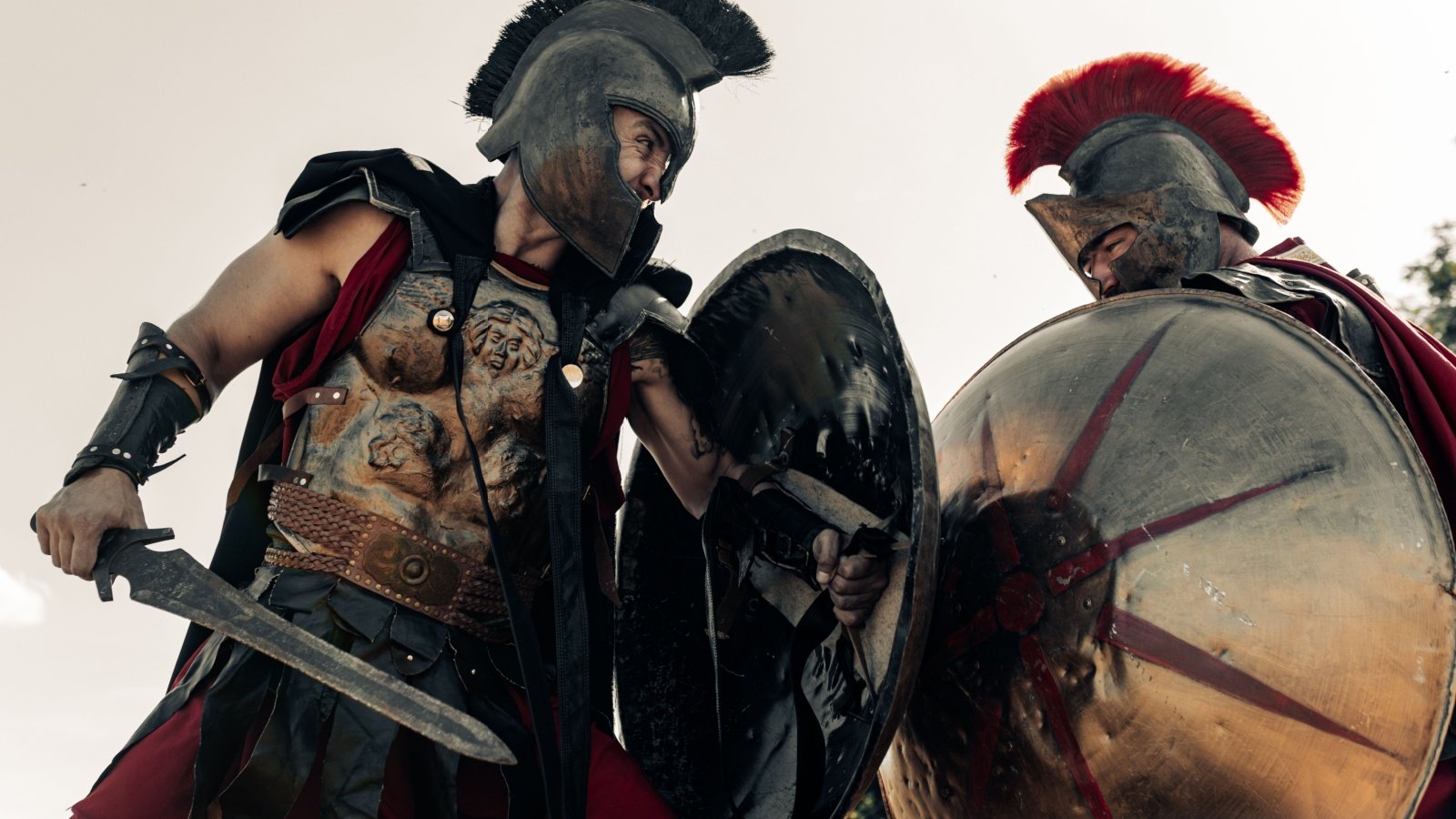
Lycurgus, the legendary lawgiver of Sparta, credited with establishing the city-state’s military-oriented reformation, might not have been a real person. Scholars argue that the reforms attributed to him could have been the work of multiple leaders over generations. His existence remains a useful mythic figure for explaining the origins of Spartan society.
William Tell

William Tell, a folk hero of Switzerland famed for shooting an apple off his son’s head, likely never existed. His story, which symbolizes the struggle for Swiss independence, shares elements with other archer legends across Europe and may be an allegorical rather than a historical figure. The lack of contemporary records mentioning him supports the view of his mythic status.
Sun Tzu

Sun Tzu, attributed author of The Art of War, a treatise on military strategy and tactics, remains a mysterious figure. Some historians believe that Sun Tzu might not have been an individual but a pen name for a compilation of various military ideas. The existence of Sun Tzu is often debated due to the sparse and conflicting historical data.
Lady Godiva

Lady Godiva, who famously rode naked through the streets of Coventry to gain a tax reprieve for its citizens, likely never existed in the way folklore suggests. While tax records from the era mention a Lady Godiva, the story of the naked ride appears only in later sources, suggesting a possible embellishment over centuries. Her tale is thought to be a moral legend.
Pope Joan

The story of Pope Joan, who allegedly disguised herself as a man and became pope in the Middle Ages before being discovered and killed, has no credible evidence. The legend surfaced hundreds of years after the time she supposedly lived, and modern scholarship generally considers her a fictional character, perhaps invented as a satire on the Catholic Church.
Sweeney Todd

Sweeney Todd, the “Demon Barber of Fleet Street,” who is said to have murdered customers and turned them into pies, originates from Victorian penny dreadfuls and is not based on a real person. His story reflects societal fears of the time rather than historical events. Modern retellings and adaptations have cemented his place in fictional lore rather than factual history.
John Henry

John Henry, the “steel-driving man,” is a folk hero from American folklore celebrated in songs and stories. While he is said to have died driving steel faster than a steam drill to prove the worth of human labor over machines, his true existence is unverified. John Henry likely embodies the collective experiences of many African American railroad workers.
Pythagoras

Pythagoras, the ancient Greek philosopher and mathematician known for the Pythagorean theorem, may not have been the sole or original discoverer of the mathematical principles attributed to him. The lack of reliable contemporary records and the secretive nature of his school contribute to the uncertainty about his life and teachings.
Ned Ludd

Ned Ludd, supposedly a young apprentice who smashed two stocking frames in 1779, spawning the Luddite movement against industrialization, likely never existed. His name is probably an invented symbol used to rally and unify those who opposed technological progress. The real identities behind the Luddite movements remain largely anonymous.
Atlantis

The legendary island of Atlantis, described by Plato as an advanced society that sank into the ocean, likely never existed. While many have speculated about locations and historical parallels, Atlantis is generally considered a philosophical allegory rather than a historical account.
The Fisher King

The Fisher King, a figure in Arthurian legend tasked with keeping the Holy Grail, embodies the themes of quest and healing prevalent in medieval literature. His historical basis is dubious at best, serving more as a narrative device than a reflection of a real ruler. The Fisher King’s tale has evolved through various retellings, blending pagan myths with Christian overtones.
Queen Califia

Queen Califia, the mythical ruler of a paradise island full of gold and riches named California, as described in a Spanish novel, has no historical foundation. Her story influenced the early European explorers’ perceptions of California, expecting riches and a regal matriarchy.
St. Christopher

St. Christopher is revered as a martyr and saint and is often depicted as carrying Jesus across a river. His stories have such a mythical quality that the historical church has debated his actual existence. His legend persists in the form of medallions and prayer cards.
The Wandering Jew

The Wandering Jew, a mythical figure doomed to live until the Second Coming for taunting Jesus on the way to the Crucifixion, is a legend with no basis in scripture or historical fact. Originating from medieval Christian folklore, this character has been used in various cultural contexts to symbolize eternal wandering.
Mélusine

Mélusine, a figure from European folklore who transforms into a serpent from the waist down once a week, encapsulates the human-animal transformation themes popular in medieval stories. Considered a founding figure of various noble European houses, her legend is rich with symbolism but lacks any verifiable historical basis.
Koschei the Deathless

Koschei the Deathless, a villain from Slavic folklore who cannot die because his soul is hidden separate from his body, embodies the archetype of the evil immortal. While his tales are popular in Eastern European folklore, he is not based on any historical figure but rather serves as a moral and cultural symbol in stories meant to illustrate the dangers of wickedness.
El Dorado

El Dorado, originally the term for a man covered in gold dust, evolved into a mythical city of gold sought by European explorers in South America. The legend spurred numerous expeditions, but no such place was ever found. Today, El Dorado is understood not as a place but as a symbol of ultimate wealth and ambition, reflecting the Europeans’ greed.





Die Baulinie des Stadtcasinos entsprach der 1821 abgerissenen inneren Stadtmauer, der ursprüngliche enge Durchgang von der Steinenvorstadt zum Barfüsserplatz
ersetzte das Eselstürlein. Der grosse Konzertsaal,
der die heutige Bedeutung des Stadtcasinos hauptsächlich ausmacht, war nicht Bestandteil des Berri-Baus, sondern wurde diesem erst 1876 angefügt.
Die Anfänge des Stadtcasinos gehen bis 1808 zurück, als sich die Allgemeine Lesegesellschaft
Basel im heutigen Reinacherhof für gemeinsame Diskussions- und Spieltreffen einmietete.
Jeder, der Roulette spielen möchte, muss in dem Grand Casino in Basel mindestens fünf
oder zehn Schweizer Franken einsetzen. Die Stadt, welche in der Nähe von Frankreich und Deutschland liegt, bietet viele außergewöhnliche Sehenswürdigkeiten. Das Stadtcasino Basel befindet sich in der Basler Innerstadt,
direkt am zentral gelegenen Barfüsserplatz.
Da das Casino direkt neben dem Airport Hotel liegt, hat das Restaurant Casino Basel
den passenden Namen „Hangar 9“ erhalten. Natürlich kannst Du aber auch
mit relativ wenigen Franken bereits spielen. Wer es beim Roulette im
grossen Spielsaal zu stressig findet, kann im Automatenbereich
Platz nehmen und elektronisches Roulette spielen. Baccarat
und Punto Banco konnte ich bei meinem Besuch leider nicht spielen, was angesichts der ansonsten grossen Auswahl aber nicht weiter schlimm war.
„Echtes“ Casino Poker gegen andere Mitspieler wird leider nicht angeboten. Dadurch ist
das Casino in der Lage, über 300 Spielautomaten und eine grosse
Auswahl an unterschiedlichen Tischspielen für seine
Gäste bereitzustellen.
References:
https://online-spielhallen.de/gizbo-casino-bonus-code-alle-wichtigen-infos-auf-einen-blick/
Carry far more weight for me than anything else this casino offers.
But that’s just one of the features I really like about this casino.
Progressive mega jackpots, fixed jackpots with max wins
of over 25,000x, Hold & Win jackpot games… you name it
– Ricky Casino has it. The 40x wagering requirements for the
welcome bonus are within the industry standards, but some of its competitors, like King Billy, offer
a lower WR of 30x. While we’re at it, I can also confirm that not
only are the payments reliable, but DragonSlots provides the quickest crypto withdrawals of all
AU casinos.
We make it our mission to connect Aussie players with
licensed, secure, and reputable platforms that welcome Australian users.
Our team understands the legal nuances of online gambling
in Australia and is here to guide you through it. Besides the usual benchmarks,
we also prioritise security, player protection, and
game fairness. Don’t forget to use the bonus code NEO100 to unlock 100 free spins and a 100% match on your first deposit.
If you’ve ever wanted to play blackjack, baccarat, or roulette from home with a real person controlling the action, here’s your chance.
So long as you’re dealing with a regulated online
gambling site, you’ll enjoy timely payouts, legitimate betting odds, and
helpful customer support.
online casino paypal einzahlung
References:
best114.net
online american casinos that accept paypal
References:
https://jobdoot.com/companies/best-paypal-casinos-usa-%e1%90%88-top-real-money-paypal-casinos/